
Tuesday 24 February 2026
M. P. Dare, Leicester’s early 20th century ghost hunter
The University of Leicester's Simon Dixon explores the life and interests of M.P Dare, historian and ghost hunter.
The University of Leicester archives contain an unusual exchange of letters between University College, Leicester and Gabbitas, Thring & Co, a firm that recruited schoolmasters for public schools in England.[1] In June 1942 they wrote to Principal, F. L. Attenborough following an application for work from Marcus Paul Dare. Dare claimed to have been a student of the College from 1921-1924 and to have received a BA in English, MA in History, and a Distinction in the Cambridge University Extra Mural Course in Egyptian History. He included on his CV two years as a Lecturer in local History and Archaeology at Vaughan College. In responding to a request to verify all of this, the College response was brief and to the point that, ‘all his statements so far as they relate to this college are false’. His only association had been to attend a weekly one hour class in English for two terms. So, who was M. P. Dare and why had he given to making fictitious claims about his education in the early years of Leicester, Leicestershire and Rutland College?[2]
Details of Paul Dare’s life can be found in the excellent Introduction to the 1997 reissue of his volume of ghost stories, Unholy Relics, written by folk singer-songwriter Reg Meuross, whose parents were friends and neighbours of Dare.[3] He was born in Leicester on 22 July 1902, son of Joseph, an Anglo-Italian merchant sea captain and later curator of Wyggeston Boy’s School, where Dare was educated. Developing an early interest in archaeology, he was said to horrify his schoolmasters by bringing Roman pottery, human bones, and other archaeological finds into school.[4] In June 1919 he passed the University of London Matriculation Examination, a pre-requisite for admission to a degree course.[5] At this time, plans were well under way for the foundation of Leicester, Leicestershire and Rutland College, which would have offered Dare the chance to pursue higher education in his home town. However, it was still over two years before the first few students were admitted in October 1921. By then, he had embarked on a career in journalism, joining the Leicester Daily Mercury as a junior reporter in 1920 and quickly advancing to become Assistant Editor of the Illustrated Leicester Chronicle.[6]
During the 1920s Dare combined his journalism career with historical and archaeological pursuits. He was elected a member of the Leicestershire Archaeological Society in 1921, and made several contributions to the Society’s Transactions.[7] His 1927 article on ‘The Cemeteries of Roman Leicester’, which featured his own hand drawn illustrations, has continued to be cited well into the 21st century.[8] In addition to his Transactions articles he published a history of Aylestone Manor and church, a guide book on Charnwood Forest and its Environs, and an extended paper on the medieval shoe trade in Leicester, Northampton and Nottingham.[9]
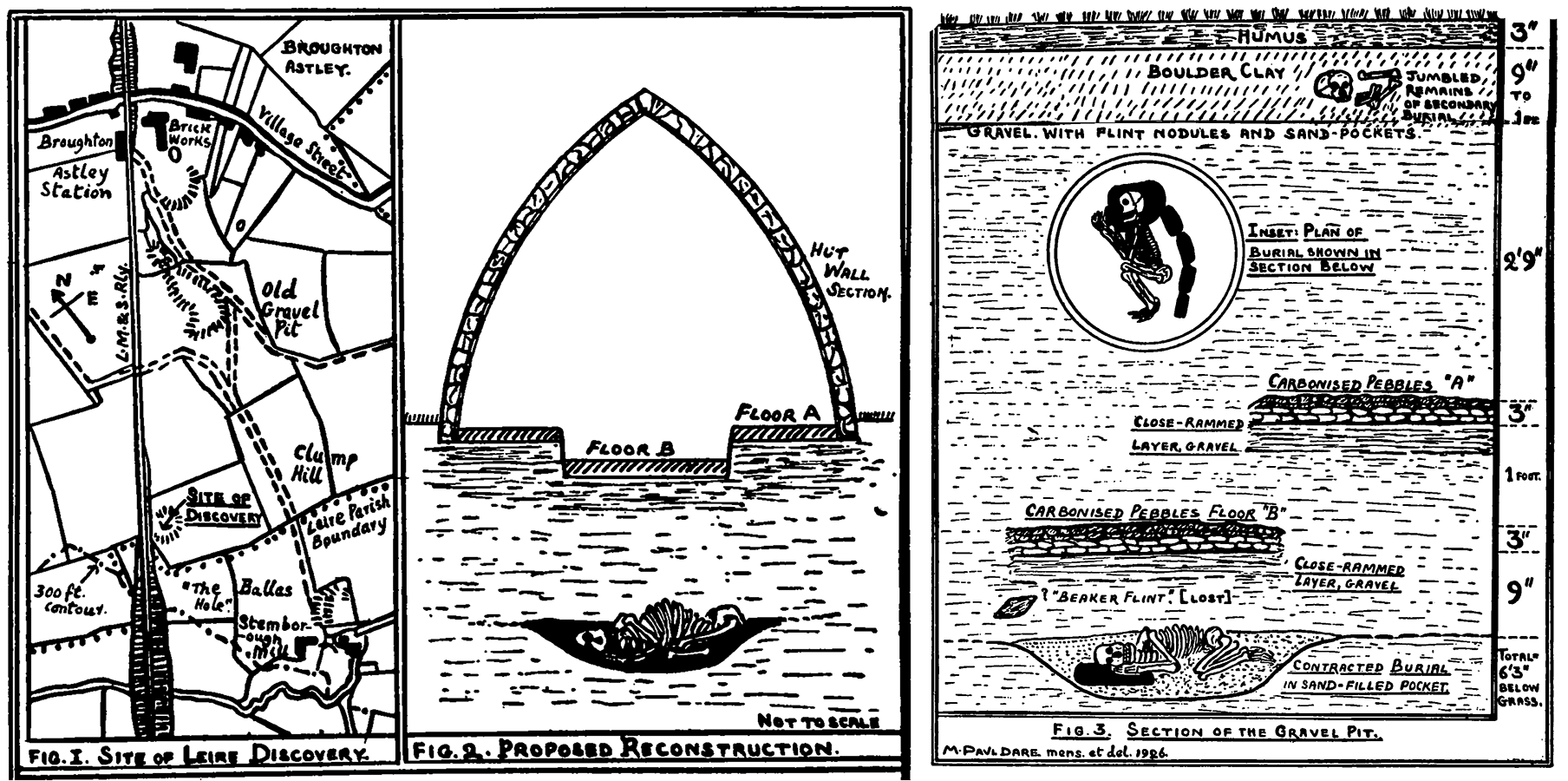
Dare’s historical and archaeological publications show him to have been a widely-read, capable, and critical researcher and writer. His publications on Charnwood and Aylestone owed much to his relationship with the respected Leicestershire historian George Farnham, who provided information for both works and seems to have become the younger man’s academic mentor. The historical introduction to Charnwood Forest and its Environs references Farnham’s ‘kind assistance’ in Dare’s analysis that it was a ‘widespread fallacy’ that Charnwood was a Royal Forest, a view Farnham endorsed in print a few years later.[10] Throughout the 1920s Dare’s antiquarian interests fed into his day job, so that by 1922 he was writing a weekly column for the Leicester Advertiser as ‘The Antiquary’.[11] He contributed historical content to all of the Leicester titles he wrote for, including a series of spoof articles published in the Leicester Mail in 1926 and 1927 reporting on the findings of ‘Professor Um-Pah’ during the excavation of an Egyptian temple on the site of Leicester in the year 3927.[12]
While his connection to University College Leicester was not as he had told Gabbitas, Thring & Co, Dare had more than a passing association with the College and its founders. In September 1920, Wyggeston Boys Grammar School began relocating to the old Leicestershire County Asylum site, where the University College would open the following year. Through his job as Curator, Dare’s father received accommodation at an address given on the 1921 census as ‘Norman House, Wyggeston Boys School, Victoria Road, Leicester’.[13] No doubt seeking to associate himself more with the College than his alma mater, Dare regularly gave his address as ‘Norman House, University College Grounds’. Through his membership of the Leicestershire Archaeological Society he would have rubbed shoulders with College founders and supporters such as Harry Peach and Thomas Hatton, as well as the first history lecturer F. W. Buckler. He dedicated his first book, Aylston Manor and Church, to Canon James Went, his old Headmaster who played an active role in founding the College.[14] In 1930 Dare contributed to a meeting to discuss the compilation of a Biographical Dictionary for Leicestershire and Rutland, along with College Principal Robert Rattray, Honorary Librarian F. B. Lott, and Dr Astley Clarke.[15] He also contributed to Historical Association branch meetings held at the College, for example giving a lecture on ‘The Craft Gilds and the end of the Middle Ages’ in January 1930.[16] The University’s copy of Charnwood and its Environs was donated by Lott, while the library also holds an offprint of one of Dare’s articles presented ‘with the writer’s compliments’.[17]
Alongside Dare’s scholarly historical pursuits, he cultivated a lifelong fascination with folklore and the supernatural. These interests began long before the publication of Unholy Relics and other Uncanny Tales in 1947, and would eventually inform a number of the short stories within it. Throughout the 1920s he collected local ghost stories and shared them with readers of the Leicester newspapers he worked for. In 1924, the Christmas number of the Illustrated Leicester Chronicle carried a full page article he wrote on ‘Spectres and Witches in Old-Time Leicestershire’.[18] Dare describes the rescue of a woman from the clutches of a ghostly gravedigger at the deserted village of Aldeby by the inhabitants of Enderby, before recounting spirit activity at Loddington, Market Harborough, Tilton on the Hill, Hinckley, and Leicester. He goes on to relate the well-known story of the “Witches of Belvoir”, a mother and two daughters accused of causing the deaths by witchcraft of Henry and Francis Manners, sons of Francis Manners, 6th Earl of Rutland.[19]
The following year, he set out on his bicycle to investigate the legend that the ghost of Lady Jane Gray appeared every Christmas Eve at Bradgate Park in a coach drawn by four headless horses. Despite enduring a cold and eerie night in the winter snow, no ghostly apparitions appeared. Instead, he reported that:
Four young deer, with their heads down, came cantering down the drive, two by two, their feet sounding like galloping horse-hoofs…. There you have your “headless horses”. The ruins and the history books have done the rest.[20]
Dare’s fascination with ghostly lore continued into the late 1920s. By now, he was regularly contributing articles on local history and archaeology to the Leicester Evening Mail. On 5 October 1928 an article appeared in the paper under the headline ‘The Ghosts of Rockingham’ describing the behaviour of a ‘thoroughly well-authenticated ghost’ in one of the village houses. The ghost of a man was reported to stamp up the stairs of the house to a bedroom where he would frantically turn out the contents of a chest of drawers, apparently in search of documents.[21] Dare would later describe having been asked to investigate this case. He had the desk searched by an expert, who found a packet of ‘old faded letters’ written in 1756 hidden in a secret draw, addressed to the son of the house by a village girl whom he had seduced, and who threatened suicide if he did not marry her.[22]
Concluding that this must have been the young man’s room, Dare and the owner of the house burnt the letters and the ghost ceased to appear. The case would form the basis for the story ‘The Haunted Drawers’ in Unholy Relics. At another Rockingham house, a ‘beautiful lady of early Victorian days’ would haunt a room containing her portrait. At the foot of the article detailing these stories is an appeal for readers’ accounts of haunted villages of Leicestershire. There followed reports of the ghost of a murdered eighteenth-century music-master at Willoughby Waterleys,[23] haunted wells in South Croxton,[24] and Robin-a-Tiptoe, a sheep rustler at Tilton on the Hill.[25] Also at Tilton, the ghost of gunpowder plotter Everard Digby was believed to haunt the Manor House by lifting latches, tramping heavily along corridors, moving cutlery, and lighting fires at night.[26]
The 1928 stories were attributed to ‘Our Special Correspondent’, but were almost certainly by Dare. The 21 December 1929 edition of the Leicester Evening Mail carried the announcement that:
Commencing next Saturday, we shall publish on this page the first of a series of articles on “Witchcraft and Superstitions in Leicestershire” by Mr M. Paul Dare, from original materials collected by our contributor, who is writing a book on the subject.
As advertised, the first of a series of articles appeared on 28 December recounting the tale of Abbot Sadyngton of Leicester Abbey who was accused in 1440 of practicing alchemy, consulting a ‘wise woman’ at Harborough, and engaging in occult rituals.[27] This episode would later resurface in the story ‘An Abbot’s Magic’ in Unholy Relics. Throughout January 1930, Dare published further articles on Leicestershire witchcraft trials starting again with the Belvoir cases. He continued to provide popular accounts of local folklore, witchcraft, and ghost stories throughout 1930. Among the cases covered in the Mail were the Horninghold witch hunts of the early 18th century,[28] Leicestershire's last recorded witchcraft related case at Great Glen in 1760,[29] and further ghost tales from Tilton on the Hill.[30]
Dare’s book on ‘Witches and Ghosts of Leicestershire’ was never published, and the manuscript was among items that were not recovered after his death in July 1962.[31] However, the Leicester Mail articles give a strong flavour of the type of work it would have been. Dare’s journalism combined local legends passed down through oral testimony with documentary evidence and published sources such as John Nichols’ History and Antiquities of the County of Leicester. In his treatment of witchcraft cases and ghost tales he treads a line between seeing them as examples of the superstitions of a less-enlightened age and genuine evidence of supernatural activity. Introducing his account of the Belvoir witches, which he concluded was an attempt ‘by a number of malevolent women to commit wholesale murder by the aid of the black arts’ he commented:
Nearly all our records of witch-trials up and down the country bear the same features; how much of the alleged performances of the witches are we to ascribe to the imagination and credulity of an unscientific and grossly superstitious age, how much is sheer chicanery on the part of the accused themselves, and how much can we say is really an evidence of supernatural powers, the reality of sorcery?[32]
Dare left Leicester in 1931, joining the Northern Daily Telegraph before taking a post on the Times of India in Mumbai the following year. He continued to pursue his interests in the supernatural and the occult, leading to the publication in 1938 of his book Indian Underworld: A first-hand account of Hindu saints, sorcerers, and superstitions. He returned to England in 1935 to work on the Nottingham Guardian in what would be his last journalism job. From this point on his life became increasingly troubled and was marked by periods of mental ill-health and encounters with the law. In May 1939, still only aged 37, he was charged with the theft of a medieval Latin Bible from Buckingham Parish Church, by which time he was County Archivist of Buckinghamshire.[33]
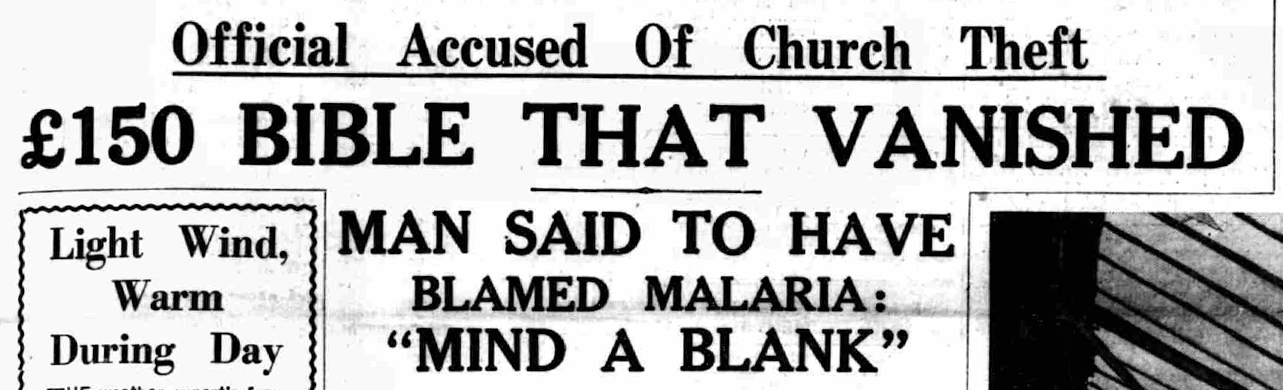
Having been eventually acquitted of stealing the Bible, in 1940 he was sentenced to a year’s imprisonment for stealing a chalice and stained glass window from a church. His marriage broke down, and on release from prison he served in the Intelligence Corps and Field Security Police, before being discharged due to amnesia. After finding work in an Oxford bookshop he was imprisoned again in 1944, this time for stealing books. He married again, opening a bookshop in Ramsgate before receiving a further prison sentence for the theft of books from public libraries. In spite of his criminal convictions, in 1947 he published his collection of ghost stories in the tradition of M. R. James, Unholy Relics and other Uncanny Tales, often drawing on the accounts that had fascinated him so much during his years in Leicester. After his second marriage ended in separation he bought an isolated cottage at Bramshill Common near Reading. His final publication, ‘Ghosts I have met’, appeared in The Listener in September 1961, based on a talk on the supernatural broadcast on the BBC Home Service.[34] While it is not always clear from the articles Dare wrote as a young man how firmly he believed in the ghost stories he enjoyed exploring, by now he described himself as an ‘occultist’ and left no doubt of his own belief in ghosts.
Dare’s life ended in tragedy on 19 July 1962 when he died by suicide, three days before his sixtieth birthday. Details of his life after leaving Leicester, including encounters with the criminal justice system and the circumstances of his death, can be found in Meuross’s Introduction to Unholy Relics and have been covered only briefly here. The purpose of this article has been to cast light on Dare’s life in Leicester and to understand the background and context for the short exchange of letters in the University of Leicester archives about his fabricated educational achievements.
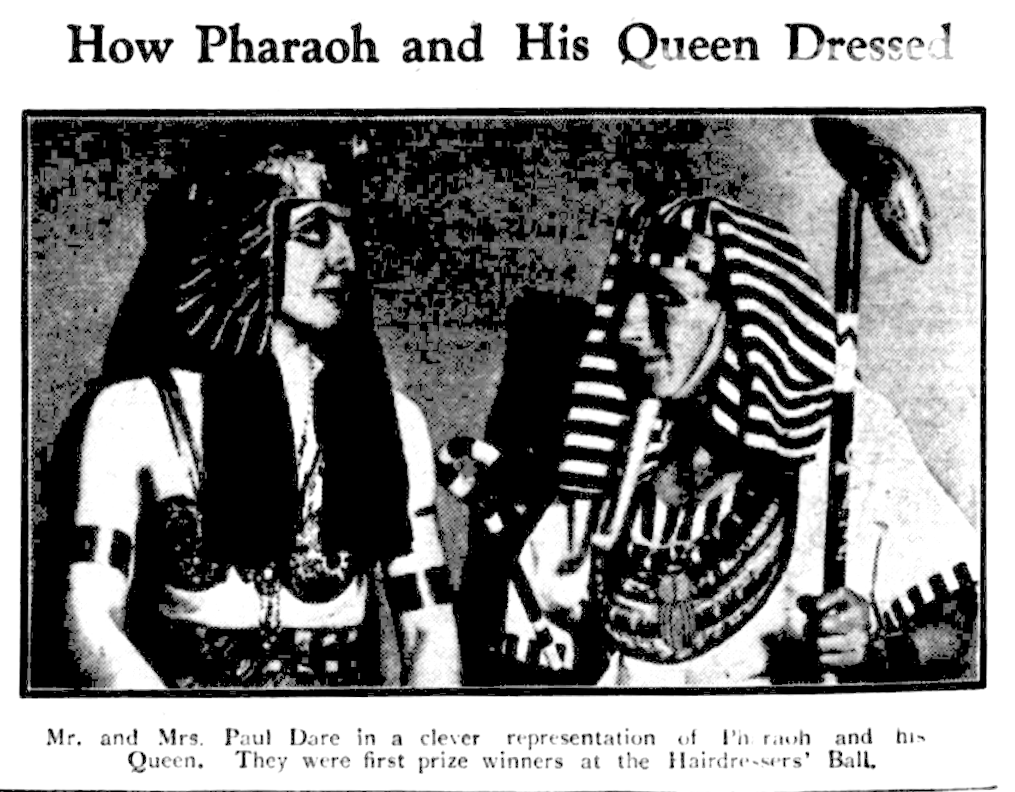
First and foremost, he had a lifelong passion for history, a journalist’s eye for a good story, and the ability to write for a popular audience. He had other interests too, founding the Leicester Gramophone Society in 1924.[35] Meuross remembers him as a flamboyant dresser, who wore capes, silk blouses, and berets. While in Leicester, he won the men’s first prize in the costume parade at the Leicester College of Arts dance in 1926 for dressing as Rameses the Great. Four years later he and his wife won the men’s and women’s prizes for best costume at the Hairdressers’ Ball at De Montfort Hall in aid of the Royal Infirmary.[36] He was a talented artist, and his designs were used to transform the foyer of the Picture House on Granby Street into a reconstruction of Circus, Maximus in Rome for a screening of the historical drama, Quo Vadis in 1925.[37]
All of the evidence from the 1920s indicates that as a young man Dare played a full and active role in Leicester’s intellectual and social life. What path his life may have taken had he been among the first cohort of students admitted to Leicester, Leicestershire and Rutland College we can only speculate.
Simon Dixon is grateful to Reg Meuross for reviewing a draft of this article. He would also like to thank Dr Michael Carter of English Heritage, whose initial inquiry last year reignited an interest in Paul Dare and his relationship to the University of Leicester.
Author’s note: Shortly after this blog was published I was emailed by editor and genre researcher, Johnny Mains. Johnny’s extensive new research into M. P. Dare will be published later this year, and will reveal for the first time the full extent of Dare’s criminal activity and the seriousness of accusations against him. The downward spiral his life took following the period I focussed on in this article was more destructive than was previously known, and there were many more victims of his crimes. This blog has been amended slightly in light of this information, but is otherwise as originally written. Readers wishing to gain a fuller understanding of Dare’s life and actions are encouraged to seek out Johnny Mains’s article when it is published later in the year. I am very grateful to Johnny for getting in touch and sharing his work prior to publication
References
[1] University of Leicester Archives, ULA/ADM/4/1/G/G
[2] Leicester, Leicestershire and Rutland College was founded in 1921, becoming University College Leicester in 1926. The University of Leicester was established by Royal Charter in 1957.
[3] Reg Meuross, Introduction to M. P. Dare, Unholy Relics and Other Uncanny Tales. 1st electronic ed. [Kindle e-book] (Ash-Tree Press, 2012).
[4] Leicester Chronicle, 3 Jan. 1925, p. 19. [All newspapers accessed via British Newspaper Archive, http://britishnewspaperarchive.co.uk].
[5] University of London, Matriculation and School Examination Lists 1901-1922 [https://www.london.ac.uk/matriculation-school-exam-lists-1901-1922, accessed, 7 Dec. 1925]
[6] Leicester Chronicle 3 Jan. 1925, p. 19.
[7] Transactions of the Leicestershire Archaeological Society, 12 (1921-22), https://archaeologydataservice.ac.uk/archiveDS/archiveDownload?t=arch-4493-1/dissemination/1921-22_12/1921-22_12_i-xxvii_-_273-277_meetings_reports_excursions_index.pdf.
[8] M. Paul Dare, ‘The cemeteries of Roman Leicester’, Transactions of the Leicestershire Archaeological and Historical Society, 15 (1927), pp. 35-57.
[9] M. Paul Dare, Aylston Manor and Church (Leicester, 1924); idem, Charnwood Forest and its Environs (Leicester, 1925); idem, ‘Medieval Shoemakers and Tanners of Leicester, Northampton and Nottingham’, Associated Architectural Societies’ Reports, 39 (1928-9), 141-77.
[10] Dare, Charnwood and its Environs, pp. 4-12; Ann Stones, ‘The Boundaries of Medieval Charnwood Forest through the lens of the longue duree (University of Leicester PhD Thesis, 2018), p. 108-9; G. F. Farnham, Charnwood Forest and its Historians and the Charnwood Manors (Leicestershire Archaeological Society, 1930).
[11] Leicester Chronicle, 3 Jan. 1925, p. 19.
[12] Mentioned in Meuross, Introduction to Unholy Relics.
[13] The National Archivces, 1921 Census Returns; RG 15/15100, ED 23, Sch 128, Book: 15100. [ancestry.co.uk, Accessed 12 Dec. 2025].
[14] ‘University of Leicester Founding Donors’ [https://leicester.omeka.net/items/show/606, accessed 7 Dec. 2025].
[15] Leicester Evening Mail, 25 Mar. 1930, p. 3.
[16] Leicester Evening Mail, 7 Jan. 1930, p. 3.
[17] M. Paul Dare, ‘Notes on a Perforation recently uncovered in the Church of All Saints’, Offprint from Transactions of the Leicestershire Architectural and Archaeological Society (1925) [Shelf mark 942 LEI/16 DAR].
[18] Leicester Chronicle, 13 Dec. 1924, p. 19.
[19] Steve Marquis, ‘“Something wicked this way comes “ witchcraft in Leicestershire’, [https://lahs.org.uk/blog/something-wicked-this-way-comes-witchcraft-in-leicestershire, accessed 7 Dec. 2025].
[20] Leicester Chronicle, 2 Jan. 1926, p. 19.
[21] Leicester Evening Mail, 5 October 1928, p. 9.
[22] M. P. Dare, ‘Ghosts I Have Met’, The Listener, 66:1695 (21 Sept. 1961), pp. 430-431.
[23] Leicester Evening Mail, 8 Oct. 1928, p. 10.
[24] Leicester Evening Mail, 10 Oct. 1928, p. 10.
[25] Leicester Evening Mail, 11 Oct. 1928, p. 8.
[26] Leicester Evening Mail, 13 Oct. 1928, p. 5.
[27] Leicester Evening Mail, 28 Dec 1928, p. 3.
[28] Leicester Evening Mail, 8 February, 1930, p. 3.
[29] Leicester Evening Mail, 15 February, 1930, p. 3.
[30] Leicester Evening Mail, 10 July, 1930, p. 18.
[31] Meuross, Introduction to Unholy Relics.
[32] Leicester Evening Mail, 4 Jan. 1930, p. 3.
[33] Gina Collia, ‘M. P. Dare: Antiquary, writer… and book thief’, The Haunted Library [ https://hauntedlibraryblog.blogspot.com/2014/10/m-p-dare-antiquary-writer-and-book-thief.html, accessed 7 Dec. 2025]
[34] Meuross, Introduction to Unholy Relics; Dare, ‘Ghosts I have Met’.
[35] Gramaphone, Wireless, and Talking Machine News, 1 Aug. 1924, p. 16.
[36] Leicester Evening Mail, 20 Dec 1926, p. 5 & 28 Feb. 1930, p. 17.
[37] The Bioscope, 5 Nov. 1925, p. 51.