

Saturday 26 September 2026
The Leicester Method and the Mowsley Sanatorium
John Lacey looks into the isolation hospital and sanatorium in the Leicestershire parish of Mowsley, and the development of the 'Leicester Method'
There are few who will have heard of the isolation hospital and sanatorium in the parish of Mowsley in the south-east of Leicestershire. Initially it formed an essential part of the county’s effort to follow in the footsteps of Leicester in providing an alternative to vaccination as a means of combating such disease as smallpox which was endemic at the time.
Subsequently the hospital became the county sanatorium being the main centre for combating tuberculosis, a condition that was widespread throughout the country and which still exists albeit in a limited number of cases. Tuberculosis is an infectious disease which affects principally the lungs but which can spread to other parts of the body and which if not treated can prove to be fatal.
The Leicester Method
During the nineteenth century and especially after an Act of 1853 made it compulsory for all infants over four months old in England and Wales to be vaccinated, opposition to the practice of vaccination increased steadily especially in Leicester which by 1885 had become the anti-compulsory vaccinationist capital of the country[1]. This contributed to an alternative system of dealing with smallpox being developed in Leicester in the 1870s, this system achieved such notoriety that by the 1890s it came to be known as the Leicester Method with Leicester being considered unique in its management of smallpox and other highly infectious or contagious diseases.
In 1870, when a scarlet fever epidemic was at its height the Town Council undertook to build a fever hospital on the outskirts of Leicester, and in 1871 the Borough Fever and Smallpox Hospital at Freake's Ground[2] was opened which was subsequently extended.
In 1877 a system was devised on the advice of the Assistant Medical Officer of Health, Dr. William Johnston, which confined all smallpox cases and their contacts, by compulsory notification. An enlightened Town Council had already provided the relatively large isolation hospital, Dr. Johnston who had appeared at the right time, was able to unify the existing facilities in Leicester, and add the need for compulsory notification, and quarantine. The method was established in Leicester before the anti-vaccinationists became a significant influence, although they were present especially following the 1871-72 epidemic, they were not the major reason why Dr. Johnston devised his system. As noted by Dr Stuart Fraser:
‘The essentials of the method were prompt notification of a case of smallpox to the Medical Officer of Health, isolation of all cases in the town's Fever and Smallpox Hospital, and quarantine for all the immediate contacts of the original case. The premises were thoroughly disinfected, and latterly all quarantines were financially compensated for time lost from work.’[3]
The Leicester Method was adopted across the county (and in many places elsewhere in the country), including in 1903 the construction of an isolation hospital just outside Mowsley sited off the Theddingworth Road away from any road or village but where a natural water supply was available. The Mowsley Hospital was one of three in Leicestershire being run by the Leicestershire Small-pox Hospitals Committee, two others being the Coalville Isolation Hospital at or near Markfield, and the Hinkley Isolation Hospital near Barwell.
Mowsley Sanatorium
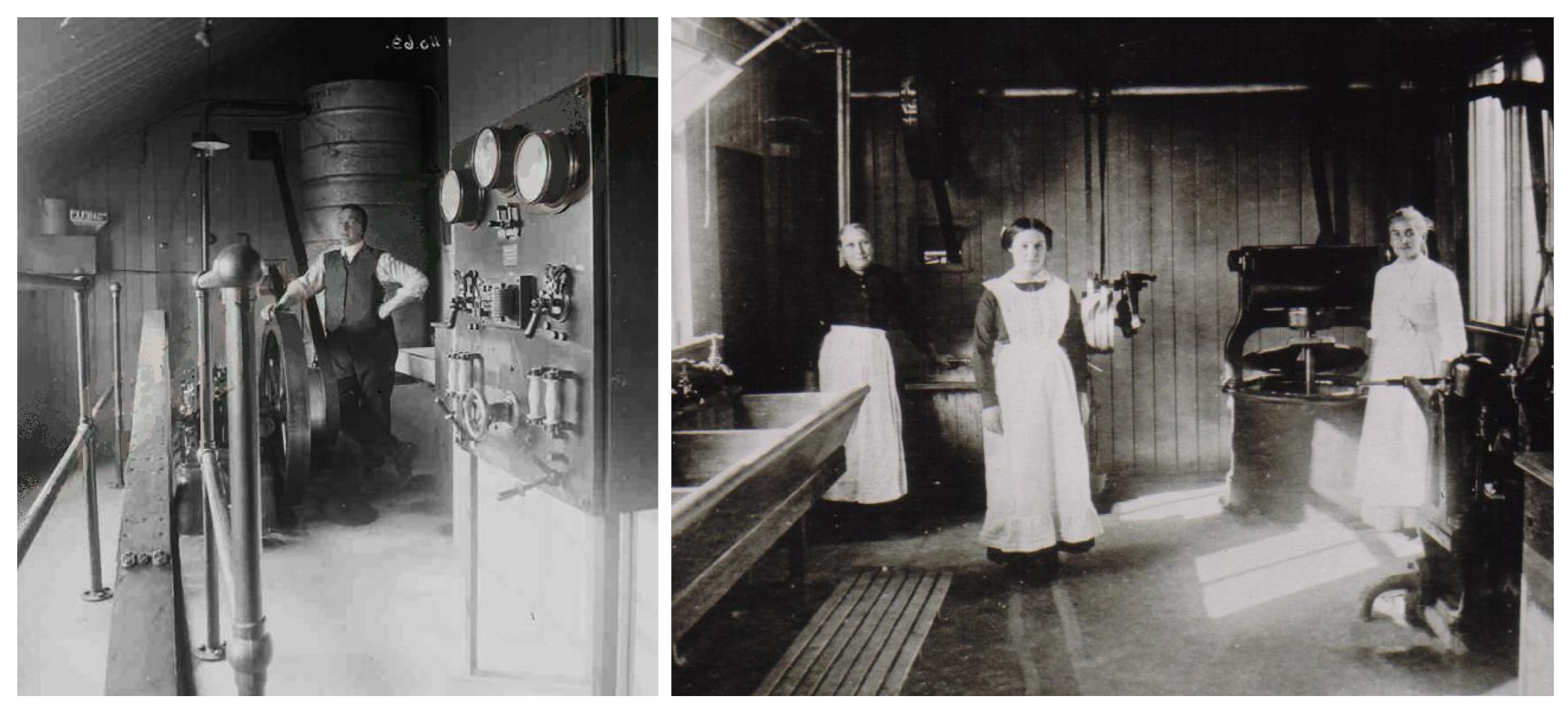
At Mowsley the natural water was the only service available, there being no gas or electricity supply in the area and the sanatorium was without a telephone until 1919. Heat and hot water would have been provided by solid fuel appliances and electricity appears to have been provided by a generator driven by an oil or gas engine.
The success in eradicating smallpox was such that even the small 30 bed unit at Mowsley was under-used, so in 1912 the hospital was purchased by the county council and was converted to the county sanatorium for the long-term treatment of ‘Consumptive Tuberculosis’ (TB) also known as Phthisis or ‘consumption’, which had unfortunately not been eradicated.
At the outbreak of the First World War, medical inspection of hundreds of thousands of recruits revealed that illnesses such as TB were almost endemic. In December 1914 25 patients (10 males and 15 females) were undergoing treatment at Mowsley. The Hinckley and Coalville hospitals had become Residential Dispensaries where patients were referred to for assessment before being transferred to Mowsley.
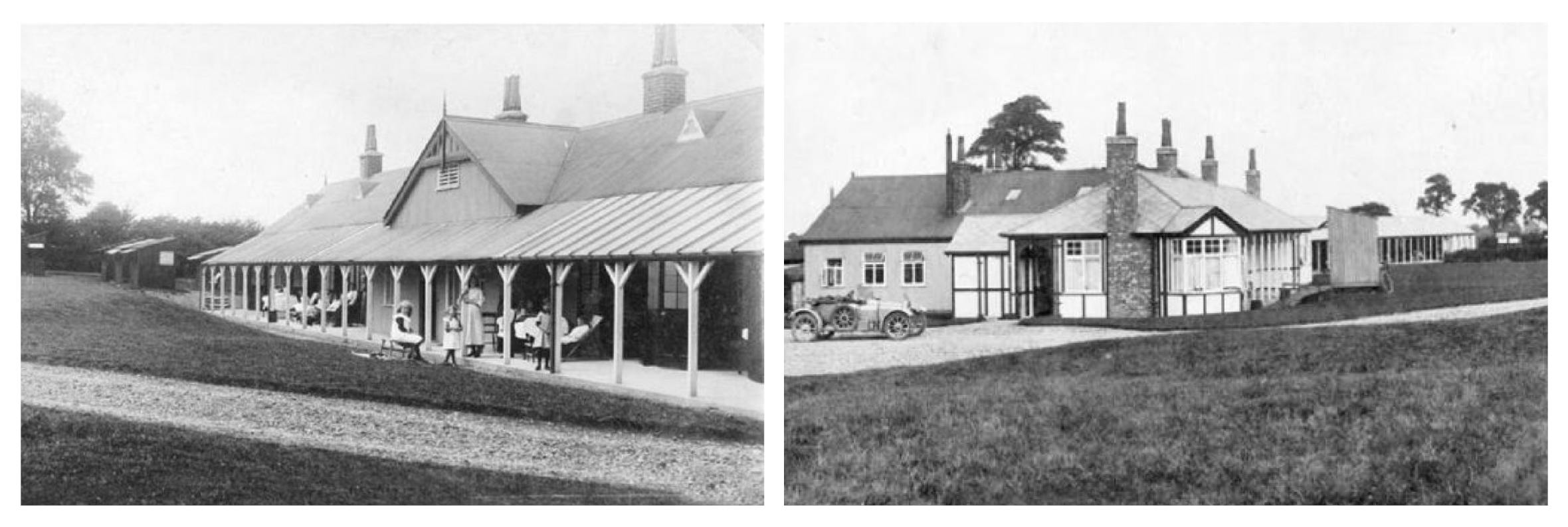
The design of the sanatorium reflected the belief of the time that the exposure of patients to fresh country air and sunshine was essential, hence the inclusion of a verandah where patients could lie in the open on cane chairs or similar. The louvre on the gable wall was part of the system to introduce air into the rooms, the small dormers may also have been similar vents.
To the rear of the building can be seen some shelters, a sort of chalet, which were provided to encourage patients to sleep out in such buildings and to provide sleeping accommodation for convalescents. Little more than timber huts these shelters were used to increase the amount of pure air tuberculosis patients breathed. Shelters were also loaned for use at patients' homes after discharge from hospital. In 1928 it was reported by the Medical Officer of Health that the number of shelters available for loan to patients was 62, and of these ten were in temporary use at Mowsley.
Invalided servicemen were treated at the sanatorium, one being Seaman Gunner George Edward Flint, of HMS Swiftsure, who was invalided home from the Dardanelles in June 1915, and for some months lay seriously ill at Mowsley Sanatorium. He died at home near Melton Mowbray in January 1916[4].
Up to the 30th October 1918 both adults and children were treated there, but after that date only women and children were admitted with ex-soldiers being treated at Snarestone Hospital which had 15 beds whilst other men were sent to the Leicester City Sanatorium at Groby Road where 15 beds were reserved for County patients.[5] It was reported; ‘At Mowsley Sanatorium the average stay of patients has been about five months, and there has been little difficulty in inducing these patients to remain.’
In the 1920s treatment involved a combination of rest, a range of often toxic medicines and surgery to remove affected tissue from the lungs, or to rest the lungs. Experimentation appears to have been carried out with ‘Colossal Calcium’ injections, ‘Dreyer's Vaccine’ and treatment with an Ultra Violet Ray Lamp (installed in 1925).[6]
There were at this time proposals to combine with another or other authorities to build a new sanatorium[7] but this does not appear to have happened. In 1921 it was reported that; ‘increased accommodation and a greater willingness to remain in the Sanatorium have produced better results, e.g., during the last 3 years 361 patients have been discharged from Mowsley Sanatorium and up to the present date 27 of this number have died.[8]’
Increased facilities continued to be provided, a chapel was built in 1923 and at some time during this period a school was provided. In 1925 there were 56 beds which reportedly were kept well filled. Six extra shelters had been erected, three double shelters were said to be continuously occupied by ‘Non Pulmonary’ patients which resulted in as many as 62 patients often being in residence, however on occasions it was necessary to send some patients to other institutions outside of Leicestershire.
The medical staff appear to have been of the highest quality, in March 1913 Miss Emily E. Merron was appointed Nurse-Matron, she had been trained in infectious nursing and had been Charge Nurse at the North Western Hospital, Hampstead. Miss Jennie Cardwell Alcock was appointed matron in 1918. Other known members of the medical staff included Dr. J. T. Crowe and Dr. D. McCarthy (1915), Ward Sister Miss Leonora Davison (1913), Sister Miss A. Ferguson, Sister Miss A. M. Richards (1921) and Sister Alice M. Ulyatt (1922).
One of the senior doctors was named - rather improbably - Noel Coward, and a Matron Hobart was said to have been a stern Yorkshire lady who organised the Mowsley and Laughton Women's Institute in the 1920s. Others came from places such as Glasgow, London, Ventnor and Manchester.
At its peak, the hospital must have employed about thirty people for as well as the medical staff there would have been an equal number of domestic staff to cook, clean and wash the linen. There would also have been administrative staff.
Land for a proposed new Sanatorium had been purchased in the Markfield area with a view to erecting a larger joint Sanatorium and Isolation Hospital to avoid the necessity of ‘the very undesirable practice’ of sending cases outside the County.[9]
The County Sanatorium and Isolation Hospital (the 'Markfield Hospital') on Ratby Lane was opened in September 1932 by Sir George Newman. It had 203 beds in six wards, with isolation for fever patients and a sanatorium for patients with tuberculosis.
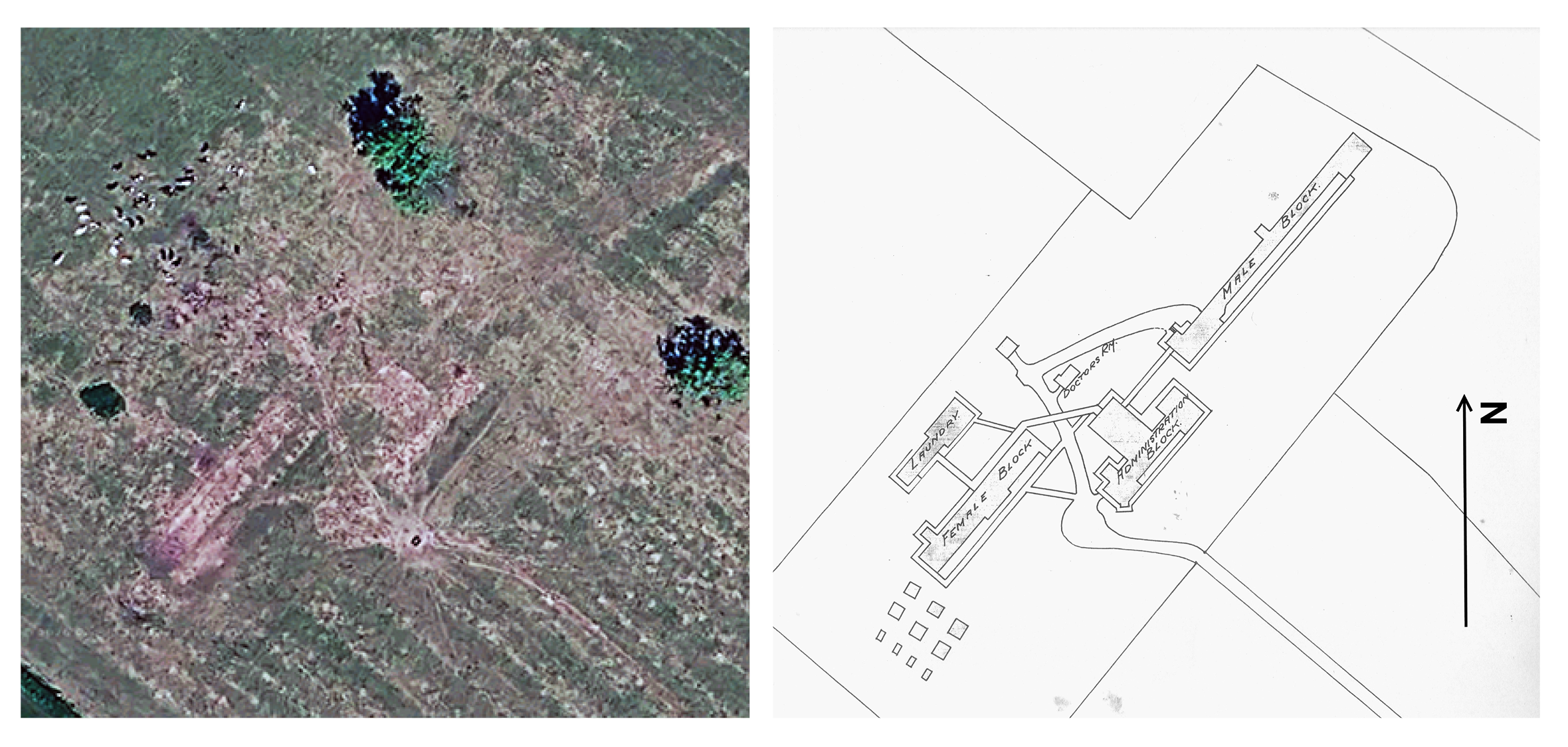
The Mowsley sanatorium was closed in November 1932 and demolished in 1934, all that remains are a few earthworks and remnants of the septic tanks (to the north west of Mowsley Lodge) but the chapel was moved to be used as a church at Broom Leys, Coalville. Dedicated to St. David, after more than thirty years it was replaced by a new church in 1965. The old chapel survived however, and today is used as part of the church hall.
NOTES
[1] The Leicester anti-vaccinationists, Lancet, 1886, i: 1036.
[2] Freake's Ground lay between the Groby and Fosse Roads
[3] Leicester and Smallpox: The Leicester Method by Stuart M. F. Fraser, M.B., B.S., M.R.C.G.P. 1980
[4] The Melton Mowbray Times & Vale of Belvoir Gazette February 11th 1916
[5] Annual Report of the Medical Officer of Health 1919
[6] Ibid 1925
[7] Ibid.1919
[8] Ibid 1921
[9] Ibid 1925