
Thursday 8 October 2026
George Newell: Founder of the First Hosiery Co-operative
Steve Marquis discovers the life and work of George Newell, Secretary of the Framework Knitters Union and Founder of the First Hosiery Co-operative.
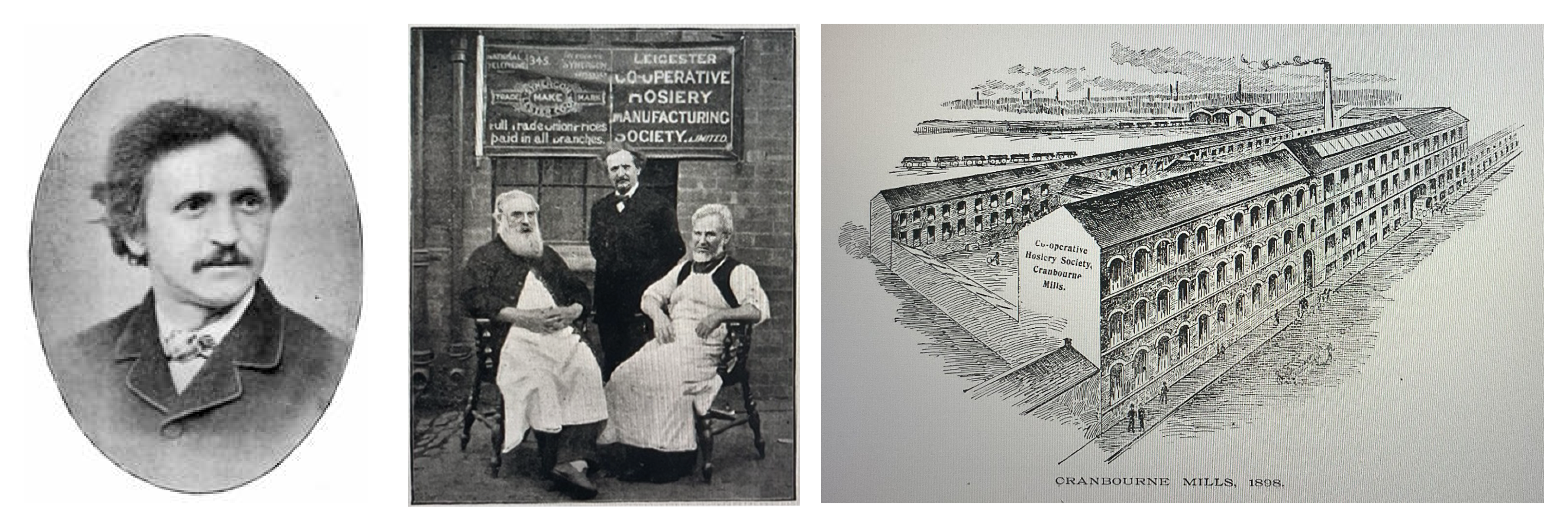
George Newell was born into a family of framework knitters in South Wigston in 1848. He would have begun working at a very young age, and by the time he reached 14 or 15, he was likely working his own frame. He married Eliza Stevenson in 1875 when both were in their late twenties, which was relatively old to marry at the time. In the same year, he became secretary of the newly formed Framework Knitters’ Union, which had consolidated several other smaller hosiery unions. Newell also played an influential role in the formation of the first women’s union, the Seamers and Stitchers Union in 1875, serving as its unofficial secretary.
He was supported by Daniel Merrick, who had been leader of the Sock and Top Union, one of the unions that joined the Framework Knitters’ Union. Born in 1827, he was active in the Leicester Chartist movement during the early 1840s. Merrick was also heavily involved in the early attempts to establish a hosiery co-operative. In fact, his participation in the creation of co-operative enterprises began very early in the late 1850s, when he helped Thomas Cook set up a stall in Humberstone Gate selling potatoes and flour. In 1867, he and Newell opened the first hosiery co-operative, but opposition from union members forced its closure a year later.
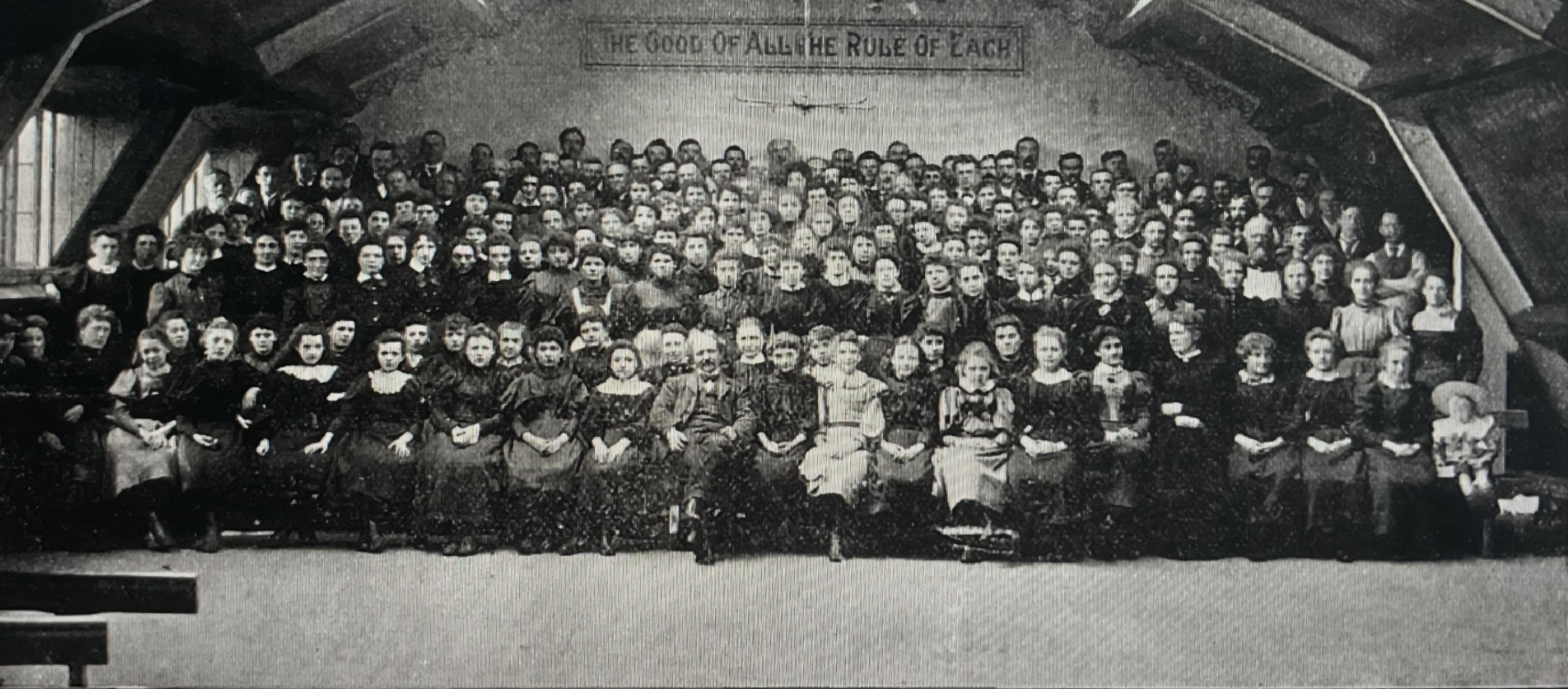
In the following year, with both refusing to accept defeat, they set up another hosiery co-operative, the Leicester Co-operative Hosiery Manufacturing Society Ltd, that would prove far more successful. Seven years later, in 1875, the Framework Knitters Union took over the running of the co-operative, and Newell became the general manager. The new enterprise began production in the front room of a cottage on the High Street, but its continued success necessitated larger premises; in 1882 it acquired a factory in Sanvey Gate and, eight years later, moved to an even larger factory in Cranbourne Street, where it employed 139 knitters.
The committee of the trade union, who were, of course, framework knitters, had the management. They had plenty of knowledge of how to make the goods, but they lacked the commercial knowledge of what to make, and how to sell… The chief cause of our success has been the help which the co-operative societies have given us in capital and trade, and the fact that we have learned to put the welfare of the society before our own opinions… ¹
In 1890, a journalist from the Workman’s Times described the conditions for the workers inside the factory: -
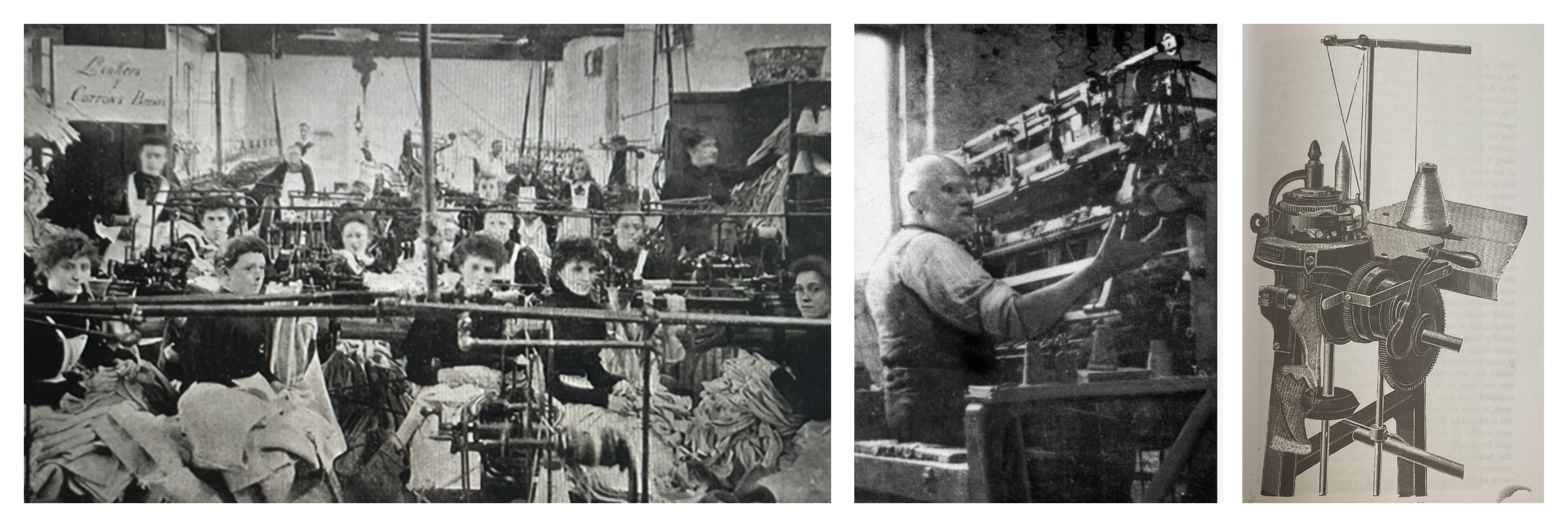
I saw enough during my tour to convince me that Mr Holmes had not exaggerated when he described the situation of those employed under the society as being a comfortable one. There are a large proportion of women and girls employed in the factory, and as I was passing through I heard many a snatch of a hymn, with the occasional chorus…³
Newell remained general manager for twenty years and in 1898 published a book titled History of the Leicester Co-operative Hosiery Manufacturing Society Ltd. with Thomas Blandford. Newell was also active in the national co-operative movement, becoming a spokesman for the Producers Co-operative Federation in 1898. He was a devout Christian, a supporter of Christian Socialism, and a deacon of Oxford Street Chapel. Like many of his fellow trade union leaders and co-operative activists, he joined the ILP and served as a town councillor from 1899 to 1901.
However, relationships between Newell and the workforce were not always as amicable as he portrayed them in the book. This was certainly the case with his male employees.
During the 1880s, new machines like the Cotton Rib and, in particular, the new Griswold-powered knitting machine imported from the USA had replaced the old hand frames. With less skill required, the cheaper labour costs of women and girls meant they increasingly replaced men on the shop floor. Dividing the workers along gender lines allowed employers to reduce pay rates for both sexes. Resentment came to a boil in 1886 when male and female workers in several hosiery factories went on strike; the Sanvey Gate workforce soon joined them.
The Leicester Chronicle on Saturday 13th of February reported that on the previous Thursday, “serious disturbances” occurred when “crowds of rough boys smashed windows in various factories causing considerable damage.” Men and women gathered outside the Amalgamated Union’s office in the Tower Buildings at around 11 am, and shortly after, a large group of mainly women carrying umbrellas marched towards several hosiery factories, where they “loudly demonstrated outside” the premises.
In 1903, the Leicester Co-operative Wholesale Society tried to purchase the hosiery co-operative; although the proposed sale initially met strong resistance from employees, it eventually went through. However, Newell, who had died in 1901, wasn’t around to see the end of the enterprise he started twenty-eight years earlier. Five years later, hosiery production was transferred to a new factory in Huthwaite, Nottinghamshire. In 1909, the Cranbourne Street factory commenced production as a C.W.S. box making and print works.
Notes and References
1. P. d’Alroy Jones, Christian Socialist Revival 1877-1914, Princeton, New Jersey, USA, 1968, page 378.
2. Diagrams in this article come from Newell and Blandford’s History of the Leicester Co-operative Hosiery Manufacturing Society Ltd., Legare Press.
3. Workmen’s Times, 14 November 1890.
Newell with the workers at the Cranbourne Factory. Newell is in the centre.